From a training curriculum to a book
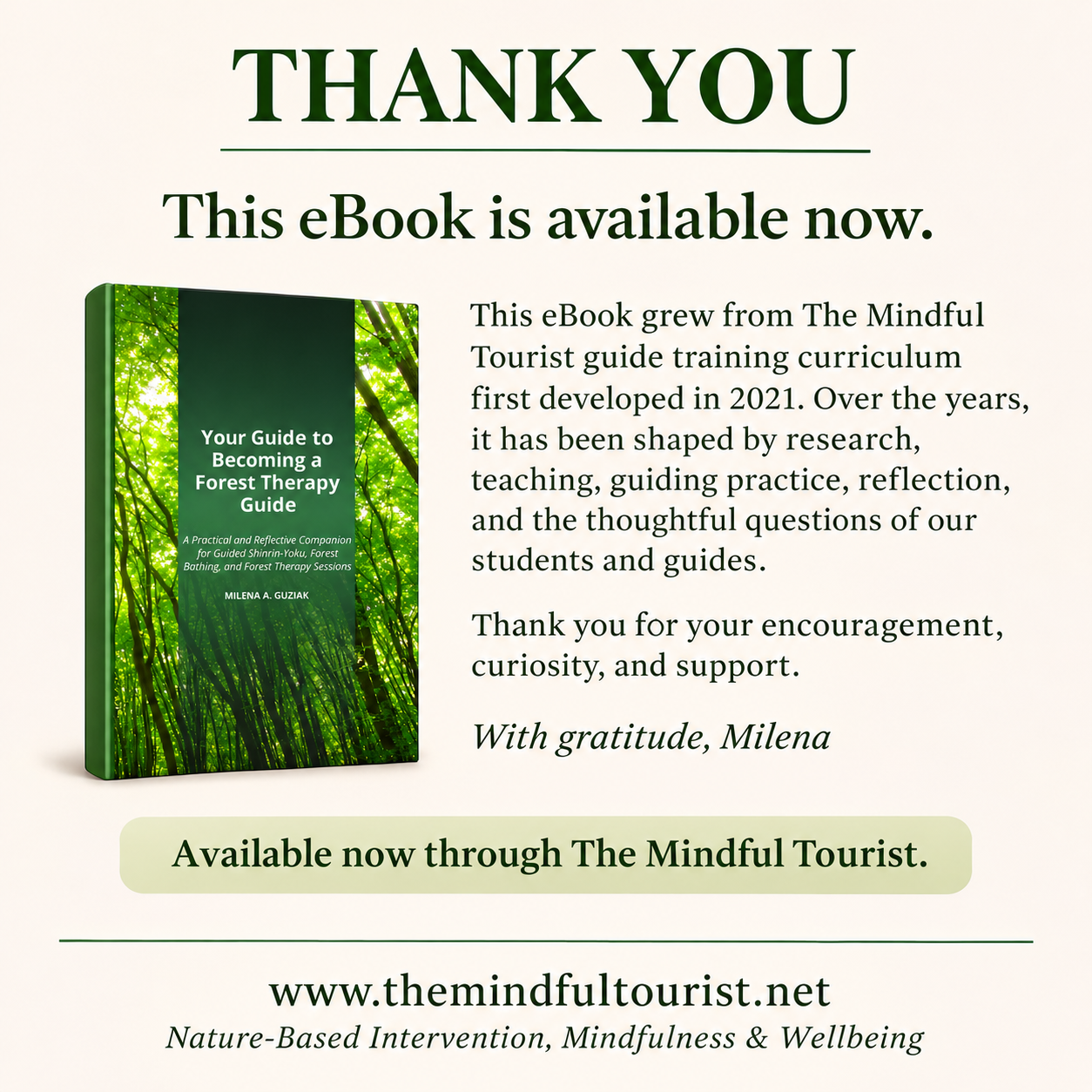
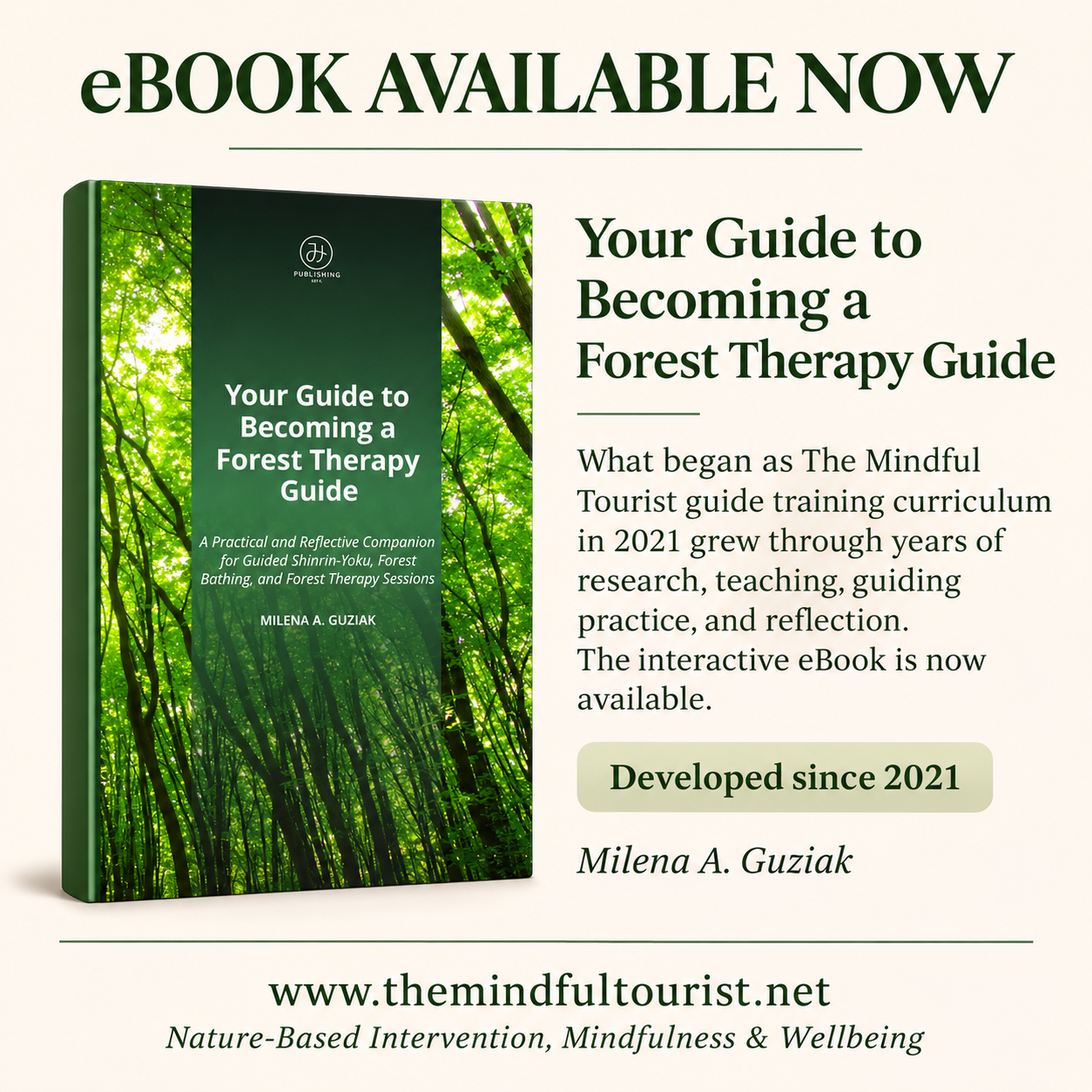
What began in 2021 as the first Shinrin-Yoku Guide Training curriculum at The Mindful Tourist® has gradually grown into something much greater than I originally imagined.
Over the past five years, this work has evolved through scientific research, teaching, guiding sessions, conversations with students, and countless moments of personal reflection. As my understanding of Shinrin-Yoku, Forest Bathing, and Forest Therapy deepened, so did the curriculum, and eventually, this book.
I am very happy to announce that the new interactive eBook edition is now available!
About the book
The book brings together history, scientific evidence, theoretical perspectives, practical methodologies, and ethical considerations for those who wish to understand and facilitate meaningful experiences in nature.
It moves from historical and scientific foundations toward the practical choices and responsibilities involved in guided sessions. Along the way, it invites readers to bring together research, observation, direct experience, and critical reflection.
Explore the 10 chapters
The chapters are arranged as a journey from foundational knowledge to session design, professional responsibility, and reflection.
CHAPTER 01From Phytoncide Therapy to Forest Therapy
Explore the discovery of phytoncides, the scientific origins of Shinrin-Yoku, the evolution of forest therapy, and possible cultural connections in Japan.
CHAPTER 02Spending Time in the Forest: Modalities of Engagement, Connection, and Care
Consider the forest as a free resource, guided forest therapy as a mindfulness practice, nature connection, and time outdoors as a nature-based intervention.
CHAPTER 03Why We Need Forest Therapy Guides
Reflect on urbanization, changing human relationships with nature, psychological distress, and where thoughtful guidance may offer support.
CHAPTER 04Phytoncides and Forest Volatile Organic Compounds
Learn about the ecological roles and chemistry of plant volatiles, seasonal and geographical variation, and what research can—and cannot yet—tell us about human health.
CHAPTER 05Physiological Markers of Wellbeing
Examine hormonal and inflammatory markers used in studies of forest exposure, including how researchers investigate physiological responses to stress and relaxation.
CHAPTER 06The Sense of Smell, Nervous System, and Forest Phytoncides
Follow the pathways of olfaction and explore how scent, emotional processing, the central nervous system, and autonomic regulation relate to the experience of a forest.
CHAPTER 07Nature and Human Well-Being: Theoretical Perspectives
Explore biophilia, Attention Restoration Theory, Stress Reduction Theory, nature connectedness, and place attachment—and how these perspectives inform guided practice.
CHAPTER 08The TMT® Scaffolded Model of Engagement
Discover a participant-centred approach to guiding, including degrees of freedom in invitations, levels of scaffolding, pacing, and autonomy throughout the session.
CHAPTER 09Designing Invitations for Guided Forest Therapy Sessions
Study the structure, presentation, themes, intentionality, and sensory modalities of invitations—including approaches beyond the traditional five senses.
CHAPTER 10Professional Identity, Agency, and Ethical Responsibility
Consider the roles of guide, participant, and forest; professional labels; ethical standards; and physical and emotional risk assessment.
The book also includes introductory material, references, reflective learning features, and an Afterword.
What is included in this edition?
The interactive edition brings together a substantial reference text with tools that make it easier to explore, revisit, and connect ideas.
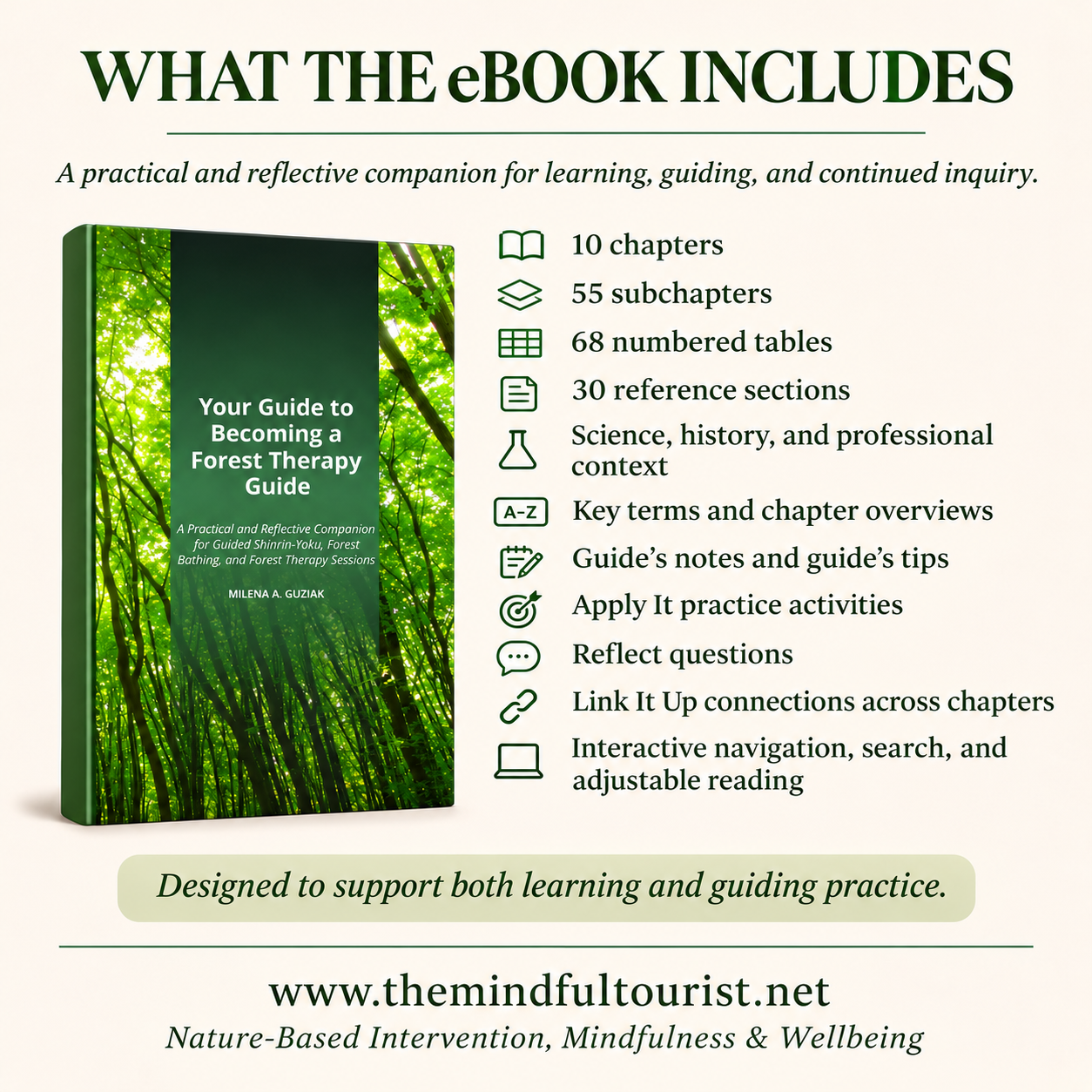
10 chapters · 55 subchaptersScience and practical guidance
Explore the history, scientific foundations, theories, methodologies, and responsibilities of forest therapy guidance.
68 numbered tablesResearch and practical comparisons
Structured tables bring together evidence, concepts, and considerations relevant to guiding sessions.
Guide's Notes & Tips
Connect theoretical knowledge with the everyday decisions involved in planning and facilitating sessions.
Apply It & Reflect
Activities and questions encourage observation, critical thinking, and personal and professional development.
Link It Up
Connect ideas across different chapters and build a more integrated understanding of the field.
Key Terms & References
Find terminology and source material to support continued learning and independent inquiry.
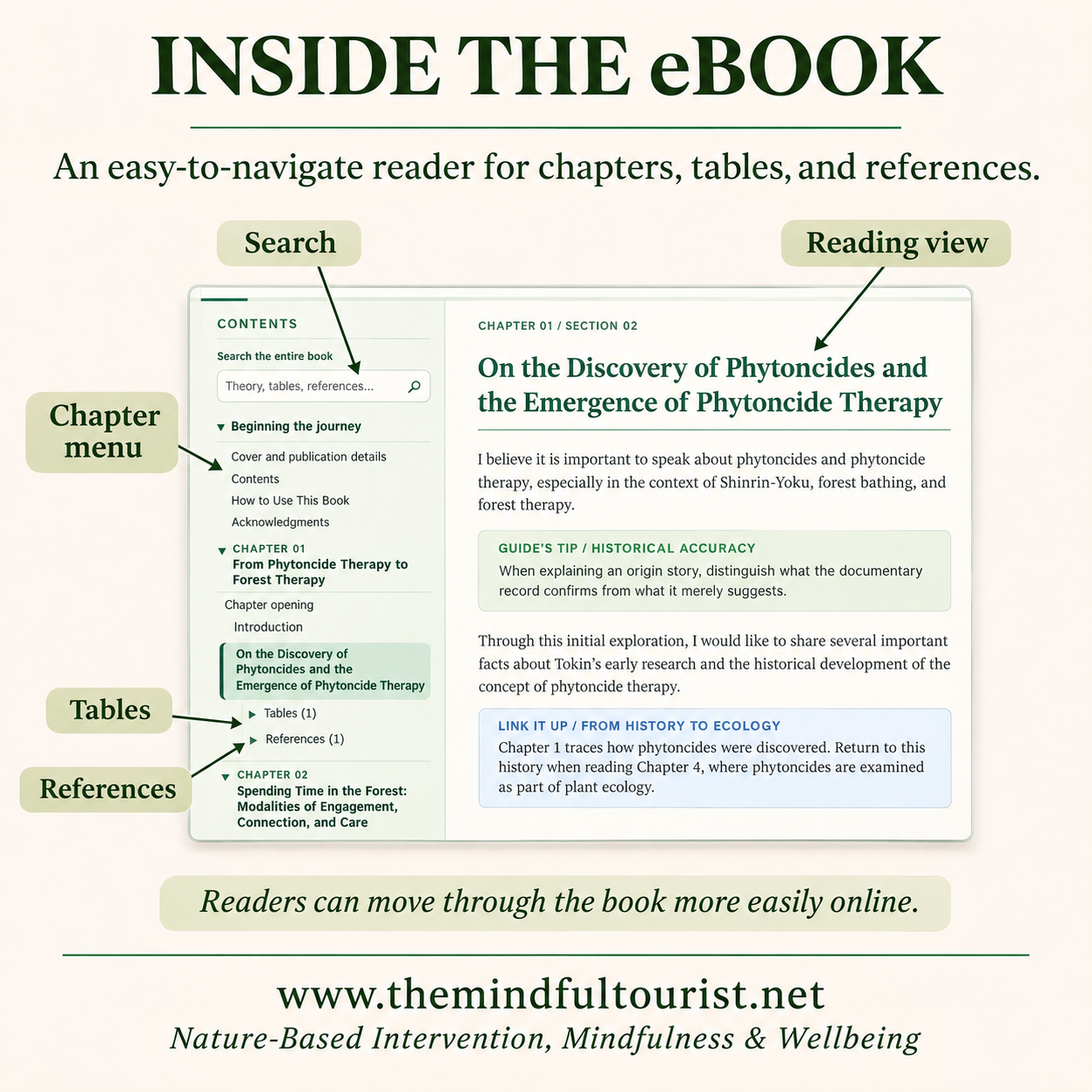
Chapter menu & search
Find sections, terms, tables, and references without needing to read the entire book in sequence.
Flexible reading
Adjust text size and navigate directly between chapters, tables, and references at your own pace.
A companion for continued inquiry
Although the book was originally developed to support our students, I wanted to make this knowledge accessible to a wider community of guides, practitioners, researchers, and anyone curious about our relationship with the natural world.
This is not a book of final answers. It is a companion for continued inquiry, one that I hope will encourage you to question, observe, experience, and develop your own understanding.
Begin exploring the English eBook
Read, reflect, and explore the science and practice of guided Shinrin-Yoku, Forest Bathing, and Forest Therapy in one interactive companion.
Open the English interactive eBook
Membership access is required to read the complete book.
With gratitude
To everyone who has walked alongside me since 2021, thank you. Your questions, feedback, curiosity, and encouragement have contributed to the evolution of this work in ways you may not even realise.
With gratitude,
Milena A. Guziak
Founder, The Mindful Tourist®