The Mindful Tourist Nature-Based Intervention, Mindfulness & Wellbeing
The Mindful Tourist

We Are Updating Our Website

We are currently updating The Mindful Tourist website, including pages, articles and resources dating back to 2021.

Bringing everything up to date will take some time. During this process, certain pages and links may not yet work as expected.

We sincerely apologise for any inconvenience. You are warmly invited to continue exploring the website and the content already available.

Thank you for your patience and understanding.

The Mindful Tourist® × El Caramillo
Luján de Cuyo · Mendoza · Argentina

Nature
Connectedness
Session

A morning to slow down, discover the science of nature connectedness, and experience the beauty of the living landscape at the foothills of the Andes.

Saturday, 19 December 2026 10:00 AM – 12:00 PM With Milena A. Guziak & Carolina Mortarotti
Nature-Based Intervention, Mindfulness & Wellbeing.
01 · The people welcoming you

Meet your guides

Two different journeys, brought together by a shared interest in the relationship between human beings and the natural world.

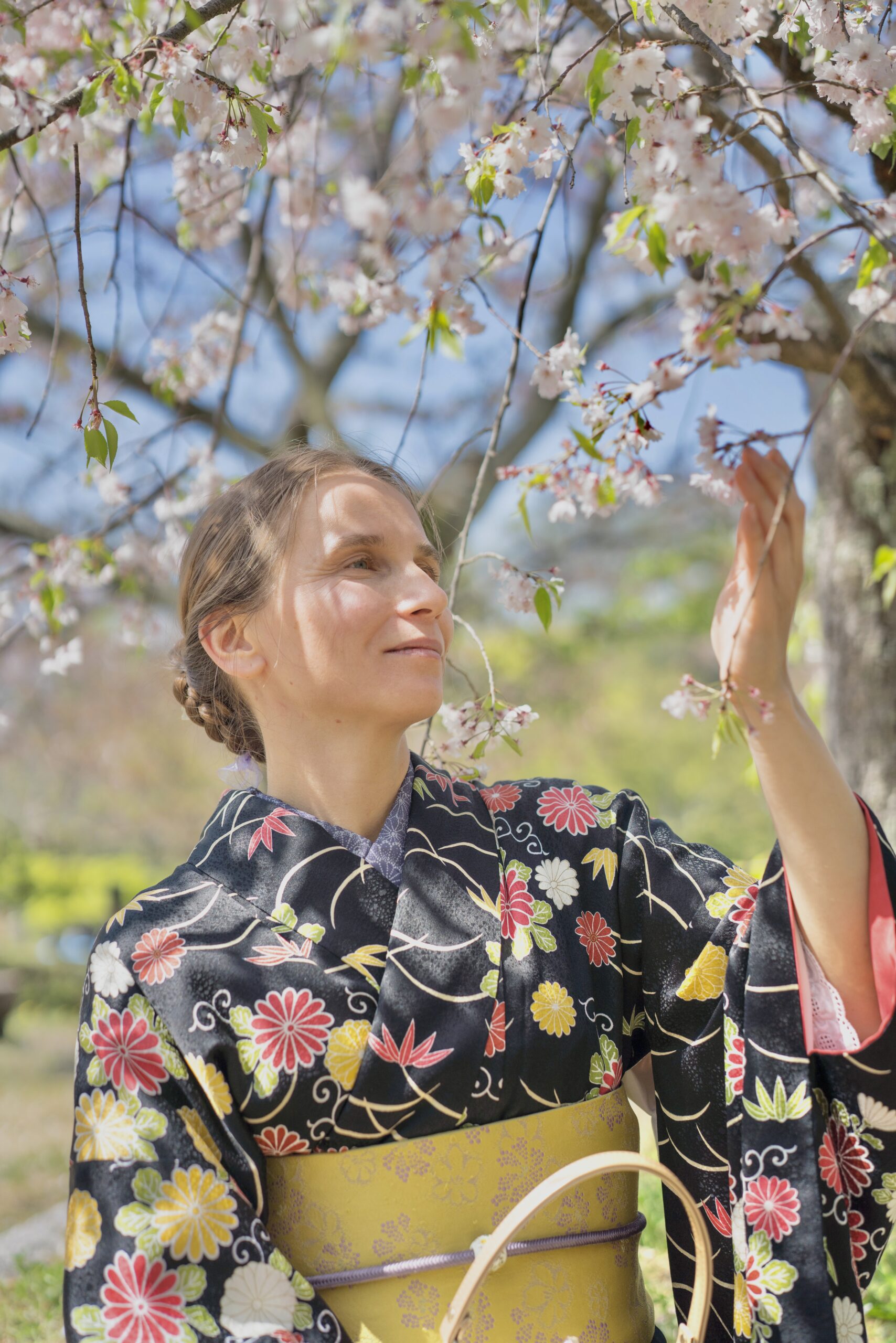
Milena A. Guziak
The Mindful Tourist®

Milena A. Guziak

MChem · PhDEng · MScPsy

Milena is the founder of The Mindful Tourist® and the Shinrin-Yoku Association. She is a Shinrin-Yoku, Forest Bathing, Forest Therapy and Nature Connectedness Guide, educator, author and researcher.

Her academic background includes a Master of Chemistry, a PhD in Applied Physics, and a Master of Science in Psychology.

During her MSc in Psychology at the University of Derby, she worked with Professor David Sheffield, engaging with research on nature connectedness and its relationship with psychological processes and human wellbeing.

Having spent approximately a decade living in Japan, Milena brings together scientific research, Japanese Shinrin-Yoku traditions, mindfulness, ethics and direct experiences of the natural world.

Through The Mindful Tourist, her books, research and training programmes, she explores how people can develop meaningful, responsible and lasting relationships with nature.

Carolina Mortarotti at El Caramillo
Barrio Natural El Caramillo

Carolina Mortarotti

Industrial Engineering background · Nature enthusiast · Mind Change facilitator in training

Carolina studied Industrial Engineering with the intention of dedicating her career to the development of renewable energy.

After several years working in corporate sustainability, she discovered that her calling to care for nature came from a simpler and more direct place.

For the past two years, she has connected daily with the plants of the Mendoza piedmont through observation, study and the companionship they offer.

Alongside this, Carolina is training as a facilitator in the Mind Change methodology, deepening her understanding of the mind-body connection and neuroplasticity.

As a manager at Barrio Natural El Caramillo, she brings her knowledge of and affection for this particular landscape, welcoming others to discover its living beauty.

02 · Saturday, 19 December 2026

Our morning together

A morning of learning, sensory exploration and meaningful encounters with nature at the foothills of the Andes.

We will meet at Barrio Natural El Caramillo, in Luján de Cuyo, Mendoza, Argentina.

The landscape of the Mendoza piedmont will become our setting for exploring nature connectedness through scientific understanding and direct experience.

Meeting point & arrival
9:30 – 9:45 AM

Please arrive at the quincho inside Barrio Natural El Caramillo between 9:30 and 9:45 AM.

This allows everyone to settle comfortably before the session begins promptly at 10:00 AM.

Find El Caramillo on Google Maps ↗
The programme · 10:00 AM – 12:00 PM
  1. 9:30–9:45 AM

    Arrival & welcome

    Meet at the quincho, check in, and prepare for our morning together.

  2. 10:00–10:30 AM

    Interactive workshop

    A 30-minute introduction to the science and theory of nature connectedness.

    We will explore research findings, the Five Pathways to Nature Connectedness, and how people develop meaningful relationships with the natural world.

    The workshop will include conversation and accessible interactive activities.

  3. 10:30 AM–12:00 PM

    Guided nature experience

    We will spend approximately 90 minutes exploring selected aspects of nature connectedness through sensory invitations, observation, curiosity and personal reflection.

    The experience will be adapted to the landscape, weather conditions and needs of the group.

    Closing · Native-herb tea ceremony

    We will close our morning with a gentle gathering and a native-herb tea ceremony, offering time to reflect on the experience.

The closing tea ceremony is included within the two-hour session. The programme may be adapted to environmental conditions and participant needs.
03 · Preparing for our experience

A little preparation, a more comfortable experience

Our session takes place in the natural landscape of the Mendoza piedmont. Preparing for the environment helps everyone participate more comfortably and safely.

December in Mendoza can bring strong sunshine, high temperatures, wind and changing weather conditions.

The landscape at El Caramillo includes rocky surfaces, uneven ground, native vegetation and insects.

We invite you to prepare with care for yourself and respect for the living environment.

Care begins before arrival.

A few simple things — suitable clothing, water, sun protection and an open, curious attitude — can make the experience more comfortable for everyone.

01 · Your preparation

What to bring

Please bring your own essential items. The session takes place outdoors.
✓
Drinking water Bring enough water to stay hydrated throughout the morning.
✓
Notebook and pen For the interactive workshop and any personal reflections you may wish to write.
✓
Mat, blanket or cushion Something comfortable to sit on during outdoor activities.
✓
Sun protection A sun hat, sunscreen and sunglasses if needed.
✓
Closed-toe footwear Comfortable, sturdy shoes suitable for rocky and uneven terrain.
✓
Comfortable clothing Lightweight long sleeves and suitable outdoor trousers.
✓
Personal medication Bring any medication you normally need.
✓
Insect protection Suitable insect repellent if you normally use it.
02 · Physical safety

Understanding the environment

Our session takes place in a natural environment where conditions may differ from those of urban parks or maintained walkways.

Before the session, we carry out a physical risk assessment of the site and planned activities.

Environmental considerations:

  • Rocky ground, uneven walking surfaces and loose stones.
  • Strong sunshine, heat, dehydration risks and possible wind.
  • Native vegetation, thorns and insects.
  • Individual mobility needs and physical comfort.
  • Changes in weather or environmental conditions.

Activities may be adapted, relocated or postponed if conditions are not considered suitable.

Please let a guide know immediately if you feel physically unwell during the session.

03 · Emotional safety

Respecting each person's experience

Experiences in nature may bring different emotional responses. Some people may feel calm, curious or joyful; others may notice memories, sadness or unexpected feelings.

No particular emotional response is expected or required.

Our approach includes:

  • Emotional risk assessment as part of the preparation.
  • Respect for personal boundaries and individual preferences.
  • No obligation to share personal feelings or stories.
  • The freedom to pause, observe or decline any invitation.
  • A respectful, non-judgmental group environment.

Our guides support the experience without prescribing how participants should feel or interpret what arises.

Let us know in advance

If you have mobility requirements, accessibility needs, relevant allergies or other considerations that may affect your participation, please contact us privately before the session.

This helps us assess whether appropriate adaptations can be made. Please share only the information necessary for your participation.

Our native-herb tea closing

We will end the experience with a native-herb tea ceremony.

Please tell us in advance about relevant allergies or dietary restrictions.

Drinking the herbal tea is entirely optional. We will identify the ingredients before serving. Herbal preparations are not suitable for everyone, including some people who are pregnant or taking medication.

Your experience, your choice

You are always free to participate in your own way.

Every activity is an invitation, not an obligation.

You may participate, observe quietly, pause or choose not to take part in a particular activity.

We aim to create an environment based on autonomy, respect, non-judgment and care for the natural world.

There is no need to achieve anything, experience a particular feeling or share anything personal.

Important: This is an educational and experiential Nature Connectedness Session. It is not psychotherapy, medical treatment or a substitute for professional psychological or medical care. Physical and emotional risk assessments are part of our preparation and guiding responsibilities.

04 · Join our gathering

Reserve your place in nature

Join The Mindful Tourist® and El Caramillo for a morning of discovery, learning and connection in the beautiful Mendoza piedmont.

We are keeping this gathering small to allow for a more personal and attentive guided experience.

20
Participants maximum An intentionally small group, with space for observation, curiosity and reflection.
Registration · December 2026

We would love to welcome you.

Whether you are curious about nature connectedness, interested in the science, or simply wish to experience the landscape differently, you are welcome to join us.

Register by 17 December 2026 Registration is required in advance. Places are limited to 20 participants.
Complete Registration Form
Completing the form is required to request participation. Places are subject to availability.
Your gathering at a glance

Everything you need to know

Date

Saturday, 19 December 2026

Session time

10:00 AM – 12:00 PM

Arrival window

9:30 – 9:45 AM
Please arrive before the session begins.

Meeting point

Quincho, Barrio Natural El Caramillo
Luján de Cuyo, Mendoza, Argentina

Group capacity

Maximum 20 participants

View El Caramillo on Google Maps

Sometimes a meaningful connection begins with something as simple as taking the time to notice.

The Mindful Tourist® · Nature-Based Intervention, Mindfulness & Wellbeing.
01 · From theory to experience

Experiencing nature in a different way

During our guided experience at El Caramillo, we will explore selected aspects of the Five Pathways to Nature Connectedness.

Rather than trying to experience all five pathways in one session, we will introduce a few invitations that encourage observation, sensory engagement, curiosity and personal reflection.

We will use the landscape around us as an opportunity to explore our relationship with nature.

We may notice the fragrance of native plants, the movement of grasses, the shapes of stones or the way the landscape makes us feel.

The experience is not about achieving a particular emotional state or completing a series of exercises.

Instead, we will create space for personal discovery, allowing each participant to experience the landscape in their own way.

Contact Beauty Emotion Meaning Compassion

These are the five research-based pathways. We will explore selected elements rather than cover every pathway in full.

There is no particular feeling you are expected to have. Every person brings their own curiosity, experiences and relationship with nature.
02 · Our experience

Notice. Explore. Reflect.

Through a selection of guided invitations, we will approach the natural world with curiosity and openness.

The activities will be adapted to the landscape, environmental conditions and the needs of the group.

01

Notice

We will direct our attention towards the landscape, exploring sensory experiences such as sounds, fragrances, textures, colours and movement.

This may help us notice details that usually pass unnoticed in everyday life.

02

Explore

We will approach the living world with curiosity.

The native vegetation, stones, insects and relationships within the ecosystem will offer opportunities for observation and discovery.

03

Reflect

We will also create moments to notice our own experience.

What attracts our attention? What feelings or thoughts arise? Does the landscape hold any personal meaning for us?

Sharing is always optional.

We do not need to understand everything about nature to begin developing a relationship with it.

03 · The role of the guide

Why experience nature with a guide?

Nature is freely available. Nobody needs a guide to develop a meaningful relationship with it.

A trained Nature Connectedness Guide can, however, support the process by offering new perspectives, carefully designed invitations and opportunities for exploration.

The purpose is not to tell participants what to feel or what nature should mean to them.

Instead, the guide helps create an environment where participants can explore their own relationship with the natural world.

01
Creating opportunities for connection

Offering invitations that encourage sensory awareness, curiosity, emotional engagement and personal meaning.

02
Sharing environmental understanding

Helping participants explore the landscape while respecting its plants, animals and ecological relationships.

03
Supporting physical and emotional safety

Assessing environmental and emotional risks, adapting activities and respecting participants' boundaries, needs and choices.

04
Encouraging independence

Our aim is not to make people dependent on guided sessions, but to support curiosity and confidence that participants can carry into everyday life.

Explore Why We Need Nature-Based Guides ↗ Further reflections on the role, responsibilities and value of trained nature-based guides.
04 · Our relationship with nature

What is Nature Connectedness?

Nature connectedness is about how we relate to the natural world — our sense of belonging, appreciation, emotional connection and care.

Being surrounded by nature does not necessarily mean feeling connected to it.

We may walk through a landscape without noticing the plants, insects, stones, fragrances or relationships that make the environment alive.

Nature connectedness invites us to move beyond simply being outdoors and develop a more meaningful relationship with the natural world.

This relationship can involve sensory experiences, emotions, appreciation of beauty, personal meaning and compassion.

What if nature were no longer simply the background of our lives, but something we experience ourselves as part of?
05 · Five pathways to nature connection

Five ways to deepen our connection

Research by Lumber, Richardson and Sheffield (2017) identified five pathways that can help people build a closer relationship with the natural world.

These are not steps to complete or goals to achieve. They are different ways to experience the living world.

01 · Sensory engagement

Contact

Experience nature directly through the senses. Notice the wind, scents, textures, sounds and movement around you.

What can you notice when you give the landscape your full attention?
02 · Appreciation

Beauty

Discover the beauty of the natural world, including small and ordinary details.

What catches your eye when you stop looking for something spectacular?
03 · Emotional relationship

Emotion

Become aware of what you feel in nature. It may be wonder, calm, joy, sadness, curiosity or something else.

What emotions arise while you experience this landscape?
04 · Personal significance

Meaning

Explore how nature relates to your memories, experiences, values and understanding of the world.

What might a small plant surviving among stones mean to you?
05 · Care and responsibility

Compassion

Develop care for other living beings and consider how our actions influence plants, animals and ecosystems.

How might you express care for the place you are visiting?

Nature connection is not something we need to accomplish. It is a relationship we can continue to cultivate.

06 · Understanding the research

What does science tell us?

Researchers are increasingly exploring how our relationship with nature is associated with psychological wellbeing, emotions and mindfulness.

In 2025, Milena A. Guziak published research examining relationships between nature connection, difficulties in regulating emotions and mindful awareness.

Milena A. Guziak · Research 2025

Understanding the findings

90 People took part

Ninety adults completed questionnaires exploring their relationship with nature, difficulties with emotion regulation and mindful awareness.

The number of participants in the study.
−0.39 A moderate relationship

Participants who reported feeling more connected to nature tended to report fewer difficulties regulating their emotions.

A negative correlation, not a 39% improvement.
15.2% Part of the variation explained

In the statistical model, nature connection accounted for approximately 15% of the differences in reported emotion-regulation difficulties.

This does not mean wellbeing improved by 15.2%.
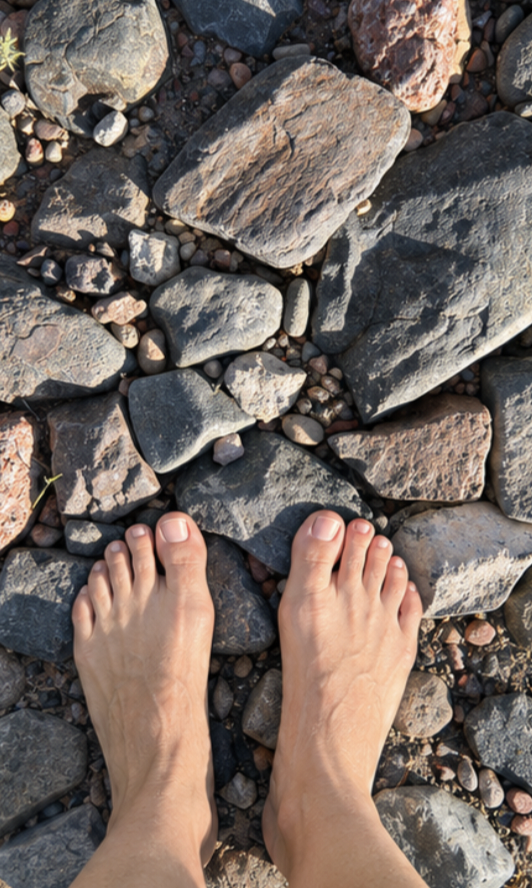
Illustrative photograph of a person standing barefoot on natural rocks in an arid mountain landscape
Shinrin-Yoku Journal · 2025

Nature Connection, Emotion Regulation & Mindful Awareness

What do these findings mean in everyday life?

Imagine two people who experience their relationship with nature differently.

One feels a strong connection to the natural world, while the other feels relatively disconnected.

In this study, participants reporting stronger nature connection generally reported fewer difficulties regulating their emotions.

These difficulties may include recognising emotions, finding strategies to manage distress, or remaining focused on activities when experiencing difficult feelings.

What does −0.39 mean?

The minus sign indicates that the two measures tended to move in opposite directions.

As nature connection scores increased, reported emotion-regulation difficulties tended to decrease.

The value of 0.39 describes a moderate relationship: noticeable in the data, but far from a perfect relationship.

And what about 15.2%?

People differ in how they experience and manage emotions.

The statistical model found that nature connection accounted for approximately 15% of the variation in participants' scores for emotion-regulation difficulties.

Most of the variation was not explained by this one-variable model. Emotional regulation is complex and involves many influences beyond nature connection.

What can we conclude?

The research suggests that feeling connected to nature may be relevant to how people experience and manage difficult emotions.

However, because this was a correlational study, we cannot conclude that increasing nature connection automatically improves emotion regulation.

The investigation contributes to a growing scientific discussion about the relationship between people, nature and psychological wellbeing.

Read Milena's Research ↗
Additional scientific perspectives

Beyond one study

Other research has explored how our relationship with nature relates to happiness, meaningful living and care for the environment.

Happiness

Capaldi and colleagues (2014) found that people who reported stronger nature connectedness also tended to report greater happiness.

Meaning & wellbeing

Pritchard and colleagues (2020) examined positive associations between nature connectedness and aspects of meaningful psychological functioning.

Care for nature

Martin and colleagues (2020) investigated relationships between nature connection, wellbeing and environmentally responsible behaviour.

Understanding the evidence: Associations do not necessarily establish cause and effect. Nature connectedness may be one meaningful part of wellbeing, but it is not a guaranteed treatment or outcome.

07 · Scientific foundations

Selected research references

  • Guziak, M. A. (2025). Investigating Relationships between Nature Connection, Emotion Regulation, and Mindful Attention Awareness. Shinrin-Yoku Journal. Read research ↗
  • Lumber, R., Richardson, M., & Sheffield, D. (2017). Beyond knowing nature: Contact, emotion, compassion, meaning, and beauty are pathways to nature connection. PLoS ONE. DOI: 10.1371/journal.pone.0177186
  • Capaldi, C. A., Dopko, R. L., & Zelenski, J. M. (2014). The relationship between nature connectedness and happiness: A meta-analysis. Frontiers in Psychology. DOI: 10.3389/fpsyg.2014.00976
  • Pritchard, A., Richardson, M., Sheffield, D., & McEwan, K. (2020). The relationship between nature connectedness and eudaimonic well-being: A meta-analysis. Journal of Happiness Studies. DOI: 10.1007/s10902-019-00118-6
  • Martin, L. et al. (2020). Nature contact, nature connectedness and associations with health, wellbeing and pro-environmental behaviours. Journal of Environmental Psychology. DOI: 10.1016/j.jenvp.2020.101389
Landscape photography: Illustrative images accessed through Wikimedia Commons. These do not depict Barrio Natural El Caramillo specifically. Contact, Beauty, Emotion, Meaning, Compassion. Some image file links have not been independently verified. Check the individual files, applicable licences and photographer attribution before publication. The barefoot photograph is an original generated illustration used for visual atmosphere, not documentation of the actual session.
The Mindful Tourist® · Explore the Science

Why Does Nature Restore Us?

Nature connectedness is only one part of a much broader scientific discussion. Researchers also investigate how natural environments may influence attention, stress responses, emotions and physiology. Even the chemical composition of the surrounding air raises fascinating questions.

Environmental Psychology

The Psychology of Restoration

Why might some natural environments help us recover from mental fatigue or stressful experiences?

Explore Attention Restoration Theory, Stress Reduction Theory, biophilia, nature connectedness and the importance of meaningful places.

Attention · Stress · Emotions · Place attachment Explore the Psychological Science ↗
Environmental Chemistry

The Invisible Chemistry of Nature

Plants continuously interact with their surroundings through chemical substances, including volatile organic compounds released into the atmosphere.

Discover phytoncides, their ecological functions, chemical diversity, possible physiological relevance and the limitations of current health research.

Phytoncides · Plant VOCs · Ecology · Human physiology Explore the Chemistry of Nature ↗

A broader scientific perspective. Restoration is not explained by one mechanism alone. Environmental characteristics, individual perceptions, psychological processes and possible physiological influences may interact. Evidence varies across mechanisms and environments, and potential benefits should not be treated as guaranteed health outcomes.

Continue Your Journey

Explore More with The Mindful Tourist®

From experiencing nature to learning how to guide others, explore our professional training programmes grounded in science, direct experience, mindfulness and ethical practice.

Explore All TMT® Trainings →
Nature-Based Intervention, Mindfulness & Wellbeing.
error: Content is protected !!
Text size
100%
New Research Publication ✦ When Does Nature Become Therapy? ✦ Shinrin-Yoku · Forest Bathing · Forest Therapy ✦ Read the Scientific Article → ✦
Member Login Login